
The Inheritance
Every tool that arrived in the last hundred and fifty years was supposed to be the end of something. The camera was supposed to end painting. Sound was supposed to end silent cinema. Television was supposed to end film. The internet was supposed to end journalism. Each of those obituaries was written with confidence, and each of them was wrong in the same way: the medium survived. What died was the version of it that had stopped asking why.
I am writing this in the spring of 2026. The machines have learned to make the images. They are cheap, they are fast, they are, by most measurements, beautiful. A studio can generate a sunset in forty-five seconds that three years ago would have required a production budget of six figures. A student can finish a feature on a consumer laptop. A single operator can output the commercial inventory of a mid-sized agency.
If this were only a cost story it would be a good one. It isn't only that.
What the Press Releases Don't Say
The industrial producers of this wave (the platforms, the foundries, the investor decks) speak in a vocabulary taken directly from manufacturing. They talk about throughput, margins, automation, scale. They do not talk about art. When they do, it is to suggest that art, properly understood, is a problem that their product is about to solve.
This is not a new argument. Walter Benjamin wrote a version of it in 1935, in an essay called The Work of Art in the Age of Mechanical Reproduction. He watched photography and film strip away what he called the aura of the original: the sense that a thing had been made, once, by a person, in a specific place and time, and could not be fully replaced. He was not wrong about the stripping. He was wrong about one thing: he thought it was the machine that killed the aura. It isn't. It's the willingness of the audience to stop looking for it.
The machine can produce anything. The question every working artist has had to answer, from the daguerreotype to the diffusion model, is the same one: in a world where the output is infinite, what is the decision worth?
Why This Publication Exists
Open Your AIs is a field log written from inside the production chain that is being rebuilt in real time. It is not a review site. It is not a tech blog. It is not a newsletter about the industry.
It is an attempt (small, imperfect, ongoing) to keep the conversation about these tools on the side of art, not on the side of the quarterly earnings call that paid for them.
That means a few things in practice. It means every dispatch starts with a question the corporation isn't asking. It means the reference might be Tarkovsky before it is a benchmark score. It means the word product is used with suspicion, and the word author without apology.
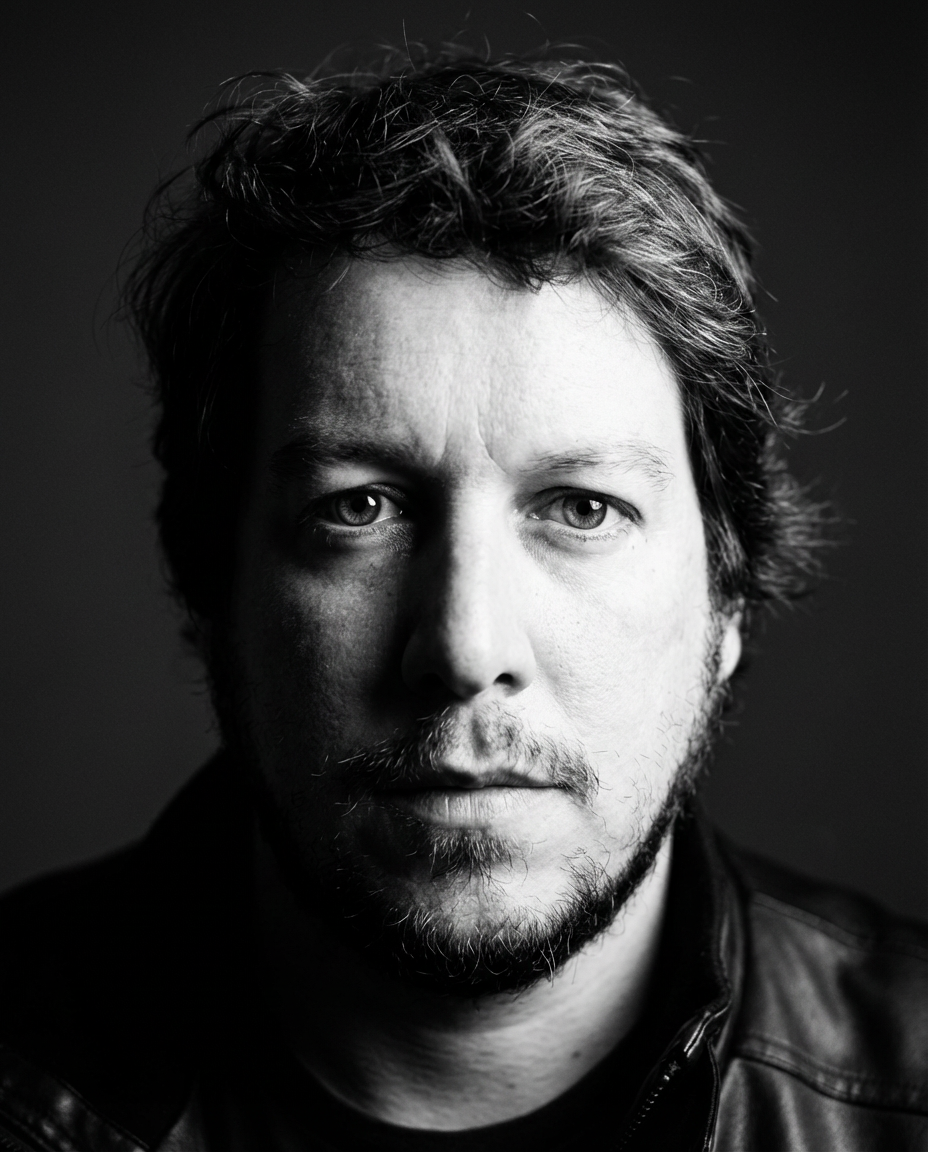
It means black-and-white photographs of film sets and editing rooms and empty theaters and faces lit from one side, because the image of a human making something, in a specific place, for a specific reason, is the counter-argument to the page that just told you about the next synthetic everything.
What Gets Kept
A tool is a tool. That is not the fight. The fight is against the flattening: the slow conversion of every artistic decision into a transaction, every image into inventory, every author into a content pipeline with a name attached.
The work of the next decade, for anyone still making things, will be to keep the decisions visible. To keep the why on the page. To remember, loudly and often, that a model can render a thousand sunsets, and only one of them was the one we waited for.
That picking is the work. These dispatches are the notebook.
What this looks like in practice
If you are reading these dispatches in order, you will notice some things that are deliberately out of step with the genre. The sentences are longer than blog hygiene allows. A reference to a 1935 essay sits beside a benchmark from last week. The headline does not promise five things you need to know. The conclusion is rarely upbeat.
This is on purpose. The format is the argument. A piece of writing about whether art can survive industrialized production should not itself read like an industrial product. If the form caves, the position is a lie.
The rest is open. The tools we cover are whatever the moment is forcing into the conversation. The angles are whatever the corporate press release is missing. The standard is the one Walter Benjamin and a thousand quieter authors before and after him kept: that the decision to look closely is the work, and the willingness to keep looking is what separates an author from a content pipeline.


