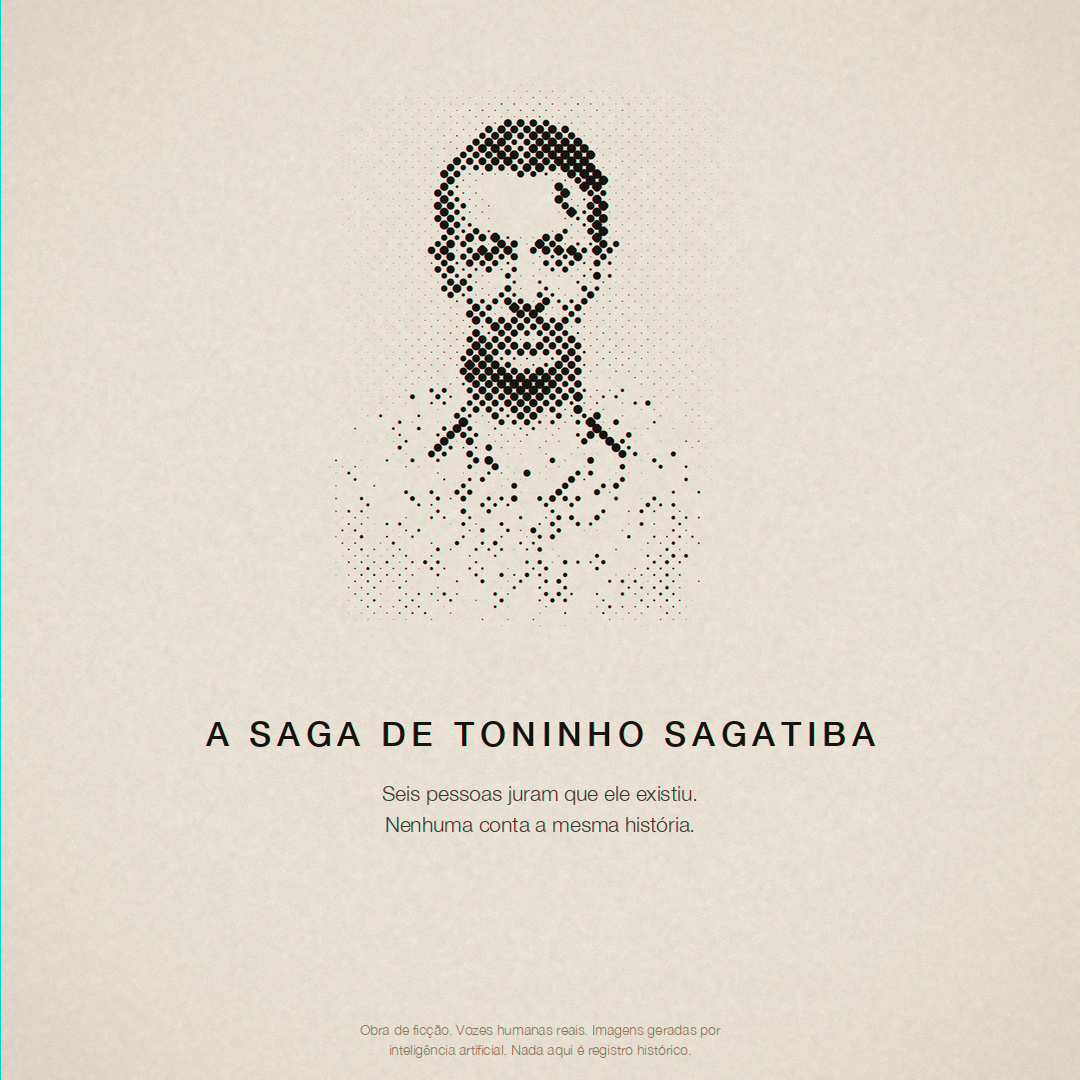
By September 2026, I had used Claude with Higgsfield to give faces and scenes to characters I had been performing in WhatsApp messages. The project became A Saga de Toninho Sagatiba. Its starting material was my own voice, improvising stories for friends.
I sent those recordings to make people laugh. I also considered them my art. There were characters in there, people with their own way of remembering things, and I wanted to see what happened when they acquired bodies and a place to sit.
This is an account of that production, illustrated with its actual development images. It describes choices and problems recorded in my project notes. It is not a controlled comparison of video models, and the images below are AI-generated production assets, not photographs of real witnesses.
The film was already in the voices
Toninho is a fictional man from São Paulo who has disappeared. Other people remember him. Their accounts can contradict each other, and the film leaves those contradictions open. Each person who speaks can introduce another life he supposedly lived.
The project DNA, recorded on August 2, 2026, gives me a useful directing rule: the absurdity belongs in what people say; the delivery stays sincere. Someone remembers something ridiculous with the seriousness of a person recalling an old friend. An exaggerated wink would spoil that feeling.
That places the work close to oral storytelling and mock documentary. A person at a table can hold your attention through conviction, a pause or a strange detail. I wanted the images to leave room for that. Making every shot spectacular would pull attention away from the person telling the story.
My recordings already contained performance decisions. The voices were mine, and the characters were mine. I used AI to develop their appearance and animate scenes around that material. This distinction matters when explaining how the film was made: synthetic faces do not mean the original spoken performances were generated.
Giving a voice a consistent face
I worked with Claude through the Higgsfield connection to organize the process and direct the generation prompts. I used GPT Image for the character work and built references before moving into scenes. My production files call the image tool GPT Image 2; that is the production label used here.
Bianchi provides a concrete example. His reference fixes a light-blue polo shirt, beige cap, khaki trousers, brown shoes and a gold wristwatch. Those details give me something specific to compare when another image comes back. A vague instruction to keep him consistent would be harder to evaluate.
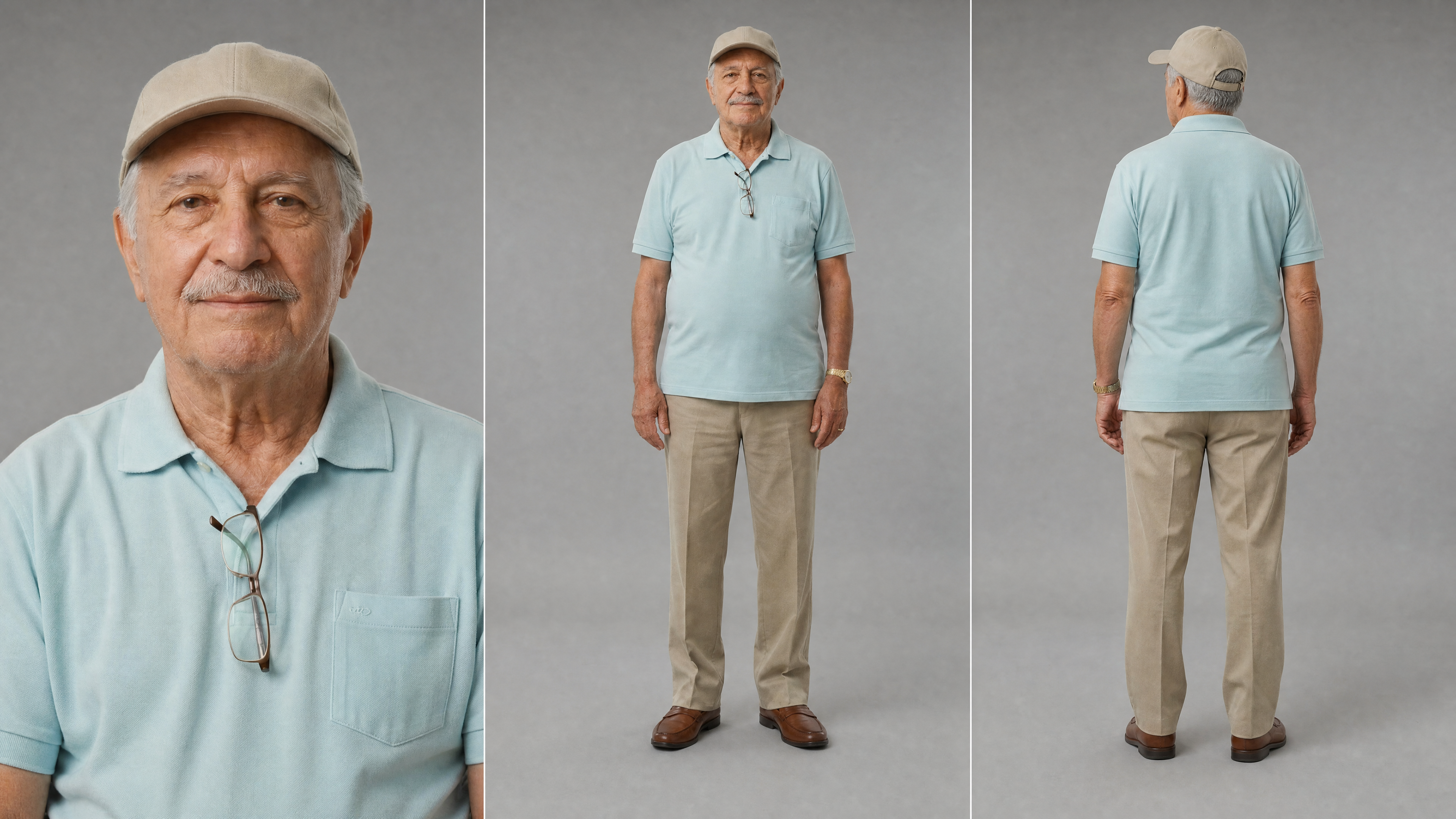
The accompanying prompt specifies the reference identity, wardrobe, three views and neutral studio lighting. It is a document for generating an asset I can inspect. It does not establish that every later generation will obey it.
That limitation became practical. The making-of notes record a case in which a written character description contradicted the reference image and the result became another person. The rule that followed was to preserve the description that had worked instead of casually rewriting it for each shot.
The scene needs somewhere to happen
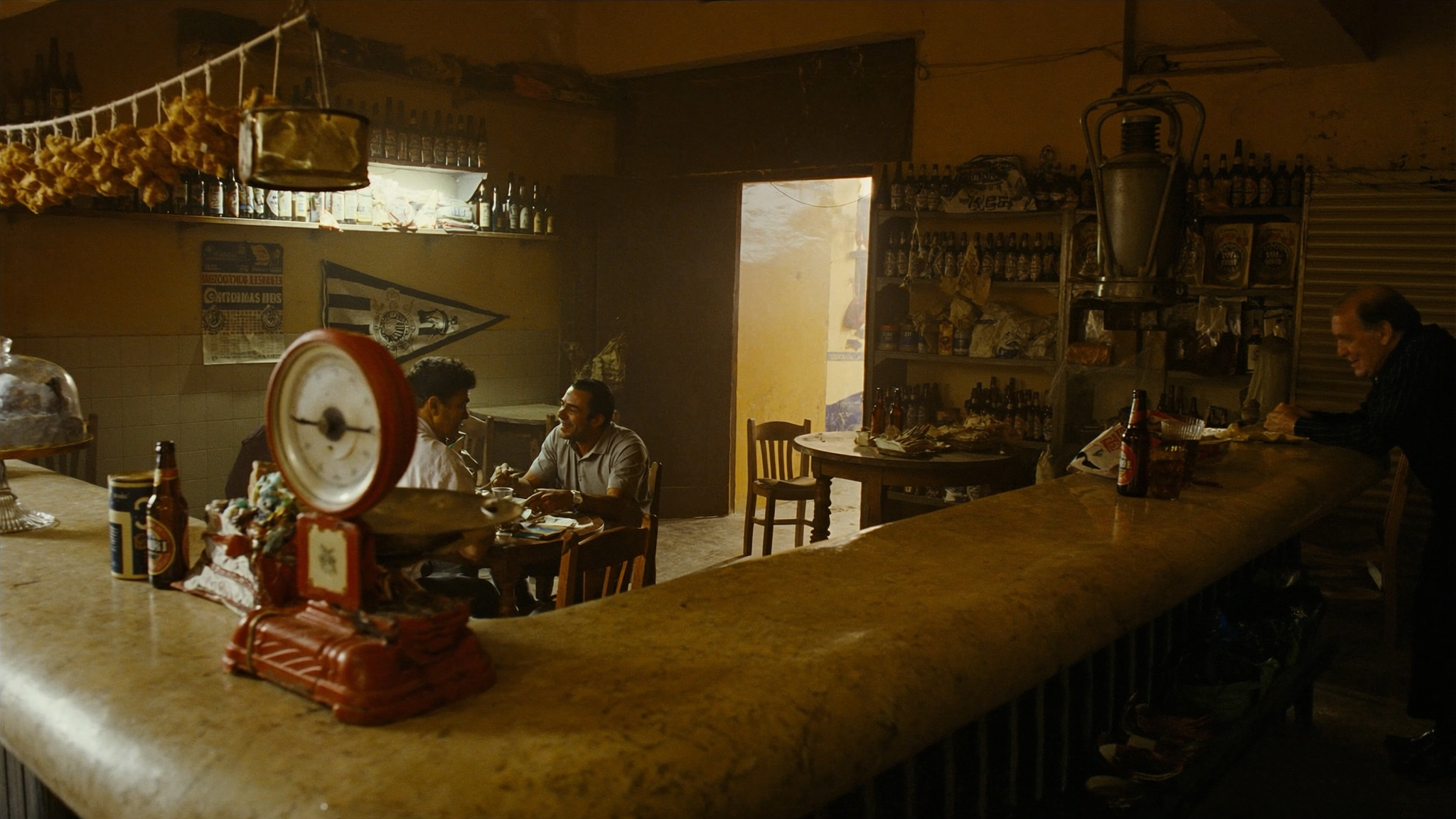
Character references were only part of the preparation. I also built environments. The bar reference below has a counter in the foreground, tables behind it and an opening bringing light into the room. Those spatial relationships give me choices about where to place a conversation and what can remain visible around it.

Before animating a scene, the workflow required a still-frame review. The checks were framing, eye-line, action and blocking, and identity. They are ordinary directing questions: who is this person, where are they looking, what are they doing, and does the composition support the scene?
The eye-line problem is particularly useful to remember. The production notes record that a character looking into the lens in the source frame kept that unwanted relationship in animation. Trying to correct it with video prompt text was unreliable in this workflow. Correcting the frame first became the working rule.
For someone trying a similar process, that is a manageable first exercise: approve one character in one intended shot before generating a sequence. Examine the face against the sheet and decide where the person should look. A successful character portrait alone does not answer either question for the scene.
Keeping the spoken performance intact
I used my original audio for the principal testimonials and generated the corresponding lip-synced scenes with Seedance through Higgsfield. I have used both Seedance 2.0 and 2.5 on the project. The earlier making-of document specifically records 2.0, so I would not assign every shot to a version without checking its generation record.
The documented workflow starts with transcription and speech blocks, followed by character references, the scene frame, animation and a speech check before editing. Colloquial speech needed attention before generation. A transcript that looks tidy can still mishear a character's words.
The project also distinguishes original recordings from supplementary synthetic speech based on my own voice references. Keeping that distinction in the production account is more accurate than calling every line untouched original audio. The central characters originate in my performances; the later work includes additional construction.
Automated speech checks helped compare whether dialogue was complete and in the expected order. They still needed my ear. The notes identify a specific weakness: a transcription system can normalize an incorrectly pronounced word into its expected spelling. Matching text therefore cannot prove that the delivered pronunciation is right.
What the mistakes changed
The production record describes environment drift, framing that widened without permission and a cigarette changing hands. These became explicit continuity checks. I treat them as observations from this project rather than permanent claims about what a model can or cannot do.
One recorded lesson concerned adjacent shots: separate generations using the same sheets could produce different environments. Carrying the final frame of one shot into the next became a way to preserve a more specific starting point. The sheet described the world; the frame carried the state of the scene.
Another note describes a hand movement that produced visible smoke when the intended reaction should have lived in the body. The useful correction was to describe the performance more carefully. More visual activity would have made the mistake louder.
These examples are why I want a production record alongside the finished work. Someone else can take the frame review or the speech-check limitation into their own test. A list of tool names would leave out the decisions that made the workflow usable.
Building a project around the film
I also used the method I call the Gauntlet Loop to organize the surrounding project, including its presentation and press materials. The idea is to give stages to reviewing agents and make revision part of the process. I turned that method into a skill for other projects.
The folder contains versions of the series bible and deck, criticism documents and the project's DNA. The important question for those materials is whether they still describe the work I intended to make. A polished presentation can be wrong about the film. I remain responsible for that judgment.
As of this account, I am submitting the project to festivals. That describes a submission stage, not a selection or an award. I am showing development assets here while keeping the complete pilot separate.
I am proud of Toninho because those private recordings have become a project I can develop further. They represent only one of the stories I have told. The pleasure is still the same as it was when I sent the audio to a friend: making a character feel present enough that somebody wants to keep listening.
MAKE YOUR OWN SCENE
Try the platform I used for Toninho
I used Higgsfield to develop characters and generate scenes for this project. If you want to try this workflow, explore the platform and its plans through my link.
Affiliate link: I may earn a commission if you purchase through this link. Your purchase can also help support Open Your AIs.
For a practical starting point, follow my character consistency tutorial and download the free prompt kit.
Production sources and scope
This account draws on my September 10, 2026 description of the project, its August 2 project DNA and the production making-of document. The illustrated assets are the Bianchi character sheet and bar reference from the second development set. Their captions identify them as generated images. The article does not claim a verified total budget, festival acceptance or a measured advantage of one model over another.