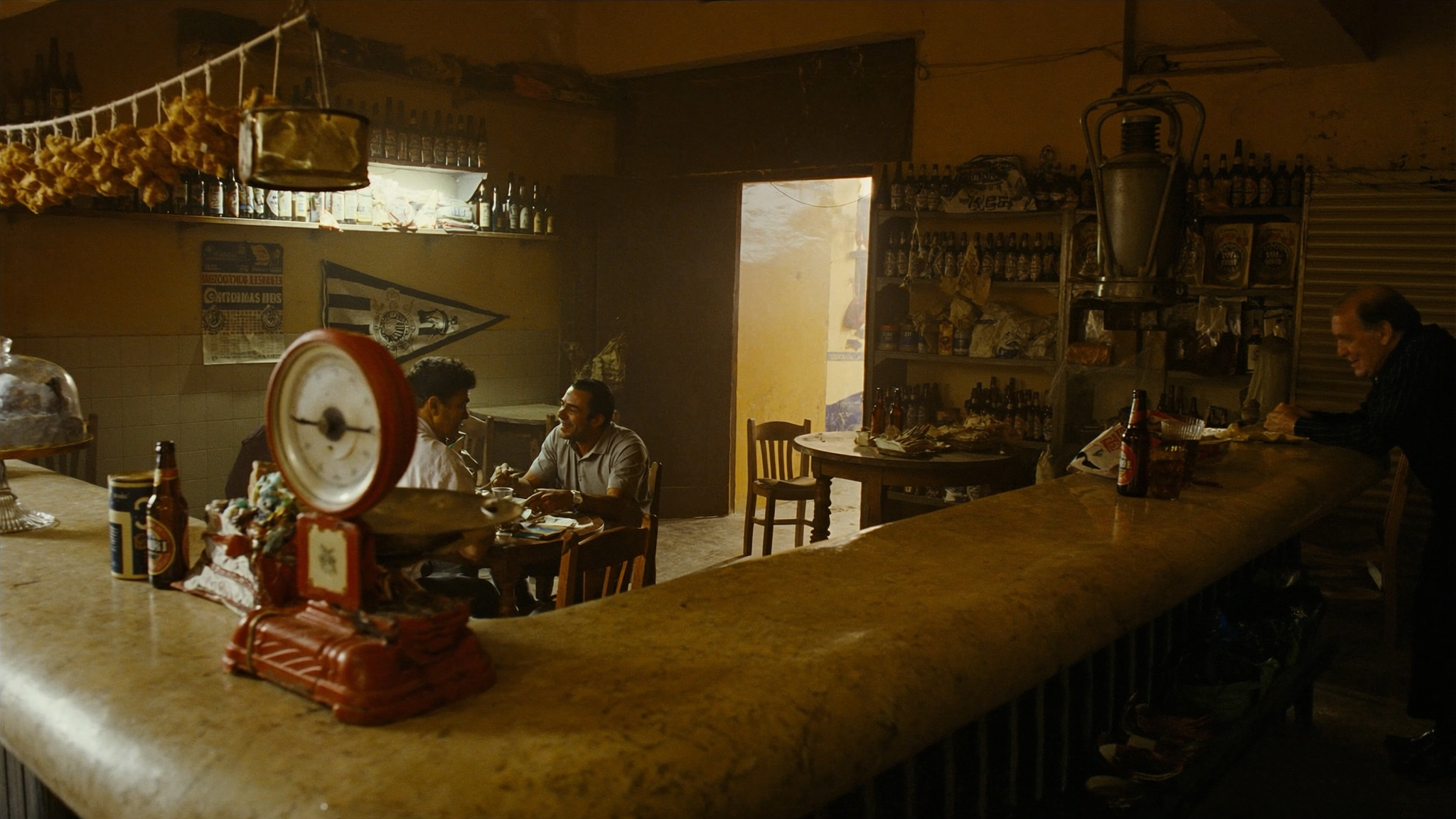
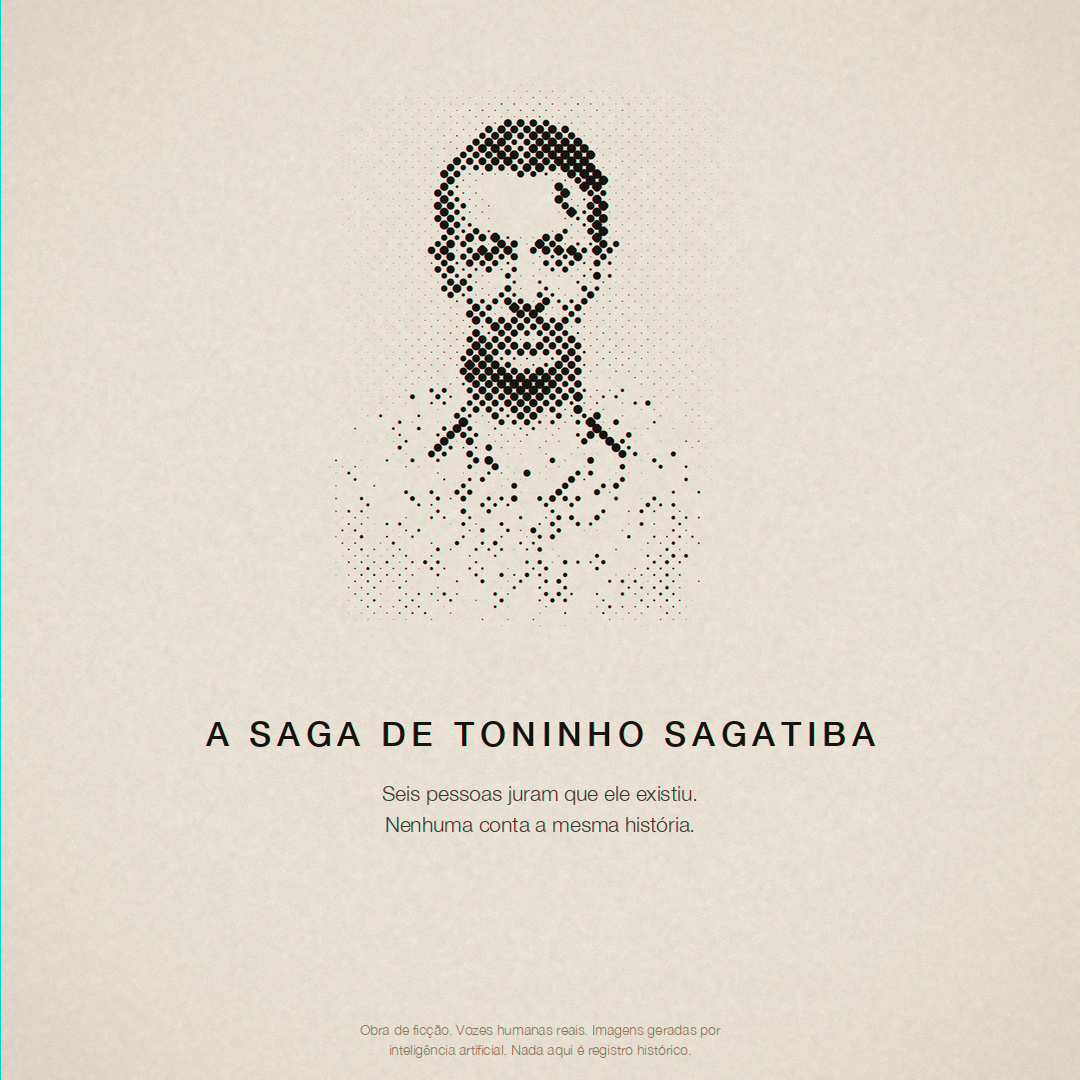
By September 2026, my Toninho Sagatiba project folder contained a series bible, a presentation deck, criticism documents and revised versions. I had used Claude and the method I call the Gauntlet Loop to help build the project around the film, including its presentation and press materials. Those review documents are useful evidence of what an agent can catch, and what a revision can still leave unresolved.
The film began with characters I performed in improvised WhatsApp recordings. Giving them images was one part of the work. Describing their world to someone who had never heard the recordings was another. A confident pitch can turn an ambiguous story into a much more conventional one.
I have already written about the general Gauntlet Loop structure. This article uses the Toninho working documents to show a narrower application: reviewing a project's presentation against its creative rules. The downloadable skill credits Matt Shumer for the underlying technique. My contribution here is the adaptation and the production decisions I made around it.
Give the reviewers something they cannot rewrite
Toninho's project DNA starts with the storytelling. People remember an absent man and their accounts can disagree. The absurdity is in what they say; they deliver it sincerely. The work needs space for the audience to wonder about those memories.
For a reviewer, that needs to become a set of questions about the actual pages. Does the pitch settle a fact the story leaves open? Does a caption make a joke on behalf of a character? Does the presentation promise a search for an answer when the project is interested in people remembering?
I think of this as a script note with a reference attached. A reader can dislike a choice, but the useful objection explains where that choice conflicts with the work's intention. Without that distinction, a persuasive review can steer the project toward the reviewer's preferred film.
For your own project, write a short reference document before asking for a pitch. Include the premise, the intended audience experience, confirmed facts and choices still open. Give that document a version name. An executor should not silently revise it to make a difficult review easier to pass.
Three problems the Toninho reviews identified
One early deck draft gave a definite year for Toninho's disappearance. The critique pointed out that the surrounding documents relied on uncertainty about the date. A neat factual opening had removed a useful ambiguity. The practical check is to compare every definite statement in the synopsis with what the story actually establishes.
Another draft declared that nobody lies. The reviewer objected because universal sincerity also gives the audience an answer. If nobody can be inventing a story, the uncertainty has already narrowed. A better instruction for this project is to keep the narrator from deciding which account deserves belief.
The reviews also challenged language that framed an episode as a search notice. A character can want to find someone while the film itself remains interested in the act of remembering. The pitch needed to preserve that difference. Otherwise the reader could reasonably expect an investigation and a resolution.
These examples come from internal draft criticism. They are not descriptions of a festival rejection or proof that every proposed correction reached the final materials. Their value is that each one locates a particular conflict a writer can inspect.
A revision needs another reading
The second verification is the part I would show someone tempted to treat agent approval as a certificate. It recognized improvements in how the format and some creative rules were carried between the bible and deck. It also found remaining contradictions.
One involved a group described as reacting without being in the same place or on the same day, followed by a scene description in which a photograph passes from hand to hand around that group. The text had left two different staging instructions. Is this a physical gathering or an editing construction? The author has to choose.
Another check concerned a statement in the deck that there were no documents, while other pages described artifacts. The reviewer distinguished an absence of documents from an absence of decisive evidence. Dropping that qualification changed the meaning.
A reviewer can identify both problems by reading across files. It does not need to invent new story events to repair them. That is why I want the comment to include the location, the conflicting statements and the decision required. A score by itself would tell me almost nothing.
Build a small review team around the deliverable
For a similar project, I would split the work by the questions the materials must answer. One executor drafts the synopsis and project description. A separate reviewer checks fidelity to the creative reference. Another checks facts, credits and consistency between files. For a website, someone must also open the pages and use the links.
This is a suggested setup for the exercise, rather than a recovered log of every agent used on Toninho. Give reviewers the deliverable and the criteria without the executor's explanation of how much effort it took. Where tasks are independent, they can run at the same time. A deck dependent on a revised synopsis should wait for that revision.
A press release has different checks from a series bible. Confirm names and credits. Distinguish a completed work from a proposed continuation. Describe submissions as submissions until there is evidence of a selection. Check which images and links are meant for public access. The Toninho production account shows development assets while keeping the complete pilot separate.
That separation matters to the website too. A public download should contain exactly what its label promises. A reviewer should open the archive, check the included files and compare them with the page's description. Looking at a button in a screenshot cannot establish that the download works.
A review prompt for your own project
This is a new exercise prompt based on the method. Set the scope to materials you can actually examine. Three rounds below is a suggested limit, not a claim about the number of rounds my film required.
Prepare a short synopsis, project description and press-release draft
from the supplied creative reference and confirmed facts.

Keep unresolved choices visible. Do not invent credits, selections,
awards, budgets, quotations or completed work.

Separate drafting from review. Give the reviewer the draft and the
creative reference, without the executor's explanation of its process.

For every material issue, report:
- the affected file and passage;
- the conflicting fact or creative rule;
- why the reader could misunderstand it;
- the smallest correction or author decision needed.

Revise within the approved scope and check the revised files again.
Compare names, premise and project status across all deliverables.
If a website is included, open it and test its public links.

Stop after at most three rounds. Report unresolved issues explicitly.
Return drafts for my final review. Do not publish or send them.
If a reviewer asks for a change that alters the premise, pause that part and make the decision yourself. An unresolved artistic choice should stay visible. Letting another round settle it by accident only hides authorship inside the workflow.
The skill and the responsibility that stays with me
FREE SKILL · READER SUPPORT
Help me make the next experiment worth sharing.
Toninho started with my own voice recordings. Turning those stories into a film meant trying tools, making creative decisions and working through what did not work. Those experiences are what I bring to Open Your AIs.
If this article gave you an idea for your own project, consider supporting the work behind the next one. Your contribution helps me keep testing, documenting the process and sharing practical resources that you can use in your own work.
Choose an amount that works for you. A one-time contribution of US$5 is suggested, and you can change it at checkout. Every contribution helps support the time and tools this work takes.
Contribute via Stripe in USD →
The skill is yours to try, whether you contribute or not.
Download my Gauntlet Loop adaptation and use it to organize your own drafting and review process. The ZIP includes the skill and a README in Portuguese, with the original technique credited.
Optional, one-time support for Open Your AIs, processed by Stripe. No subscription. Payment is not required to read the articles or download this skill.
The original recordings, the characters and the decisions about what Toninho should feel like remain my work. Agents helped develop the surrounding materials and exposed contradictions in the drafts. Reading those objections gave me specific choices to make. I still have to decide whether the resulting project describes the story I wanted to tell.