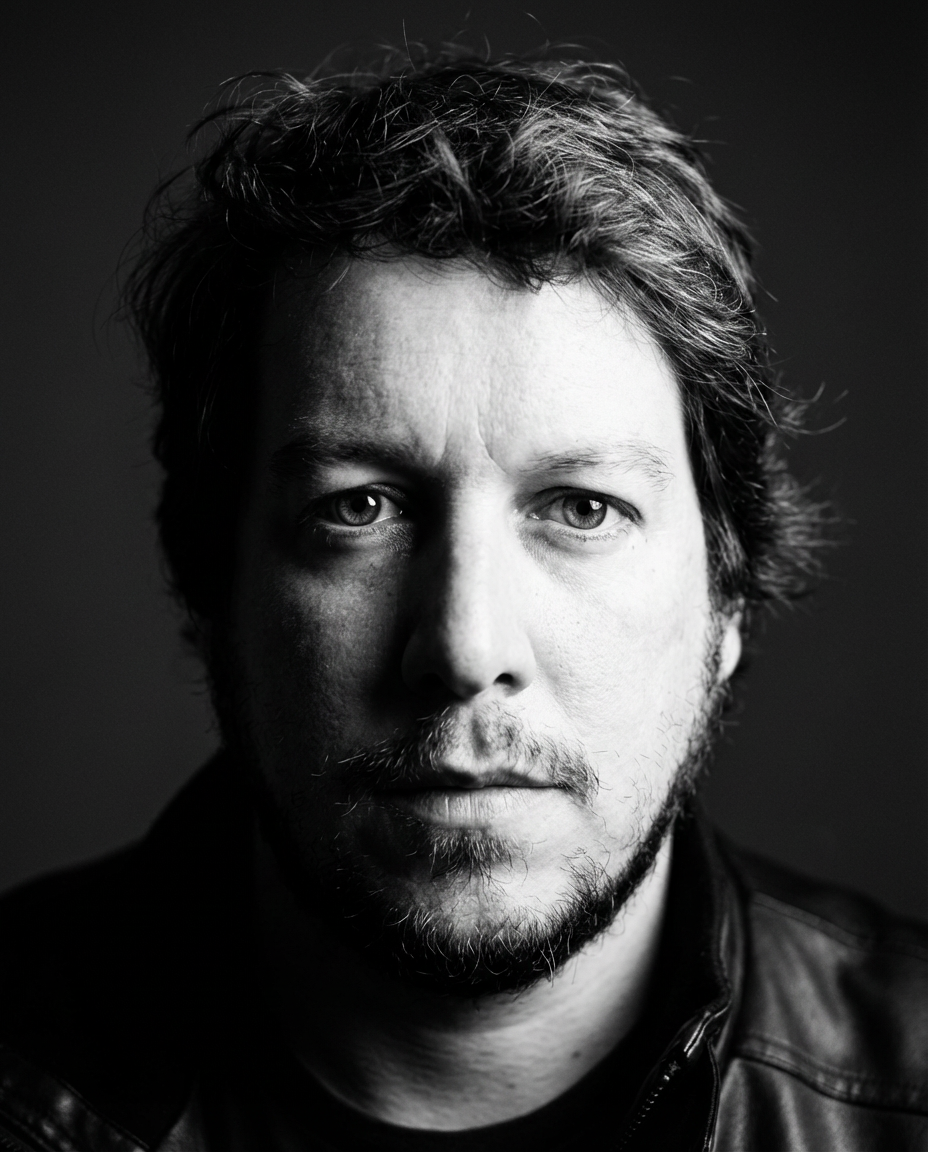

Updated September 8, 2026: this was written on July 31, when the ten finalists had been named and the result was still ahead. It is settled now. Robert Gaudette won the Reply AI Film Festival 2026 with "A Face Only A Mother Could Love" at the ceremony in Venice on September 6, during the 83rd Venice International Film Festival. Alex Naghavi and Ezra Li took second, 2xLabs took third, and the Community Award went to "Website" by Jiaze Li. The finalists and the full result are on the official festival page. What follows is the argument I made before the jury spoke, and I have left it standing.
The number nobody talks about
On July 28, 2026, the Reply AI Film Festival announced the ten finalists of its third international edition. The competition, running under the theme "Imaginatio Nova," drew more than 3,000 short film submissions from 76 countries. The jury, chaired by Italian director Gabriele Salvatores, who won the 1992 Academy Award for Best Foreign Language Film for Mediterraneo, named the winners in Venice on September 6, during the 83rd Venice International Film Festival.
The press release leads with 3,000. Tech coverage leads with 3,000. The number signals scale, momentum, legitimacy. It does all of those things accurately.
But the number that carries more weight is 10.
What do we do with the 2,990 films that did not make it? And what did the 10 that did have in common with each other, and in contrast with everything else in that pool?
The competition's selection criteria answer this directly, if you read past the headline: works were chosen based on "creativity, production quality and use of artificial intelligence across the different stages of the filmmaking process, from screenwriting to post-production." The AI use was being evaluated. Not the presence of it. The use.
The oldest question in film has not changed
Venice has been running since 1932. Photography did not kill painting. Cinema did not kill theater. Television did not kill cinema. Every new medium arrived with its eulogies pre-written, and the things that were supposed to die kept doing whatever they had always done, and the new medium found its own space and its own specific conversation.
What changed each time was not the art form. What changed was who got to make things, and how fast, and with what resources. Gutenberg did not kill the handwritten manuscript; he multiplied who could read. The Bolex did not shut down professional film; it opened documentary and experimental cinema to people who were never going to afford a studio. The digital SLR changed who could make a feature. The iPhone changed it again.
The 3,000 submissions to a competition held in Venice's shadow are a version of that same pattern. The barrier to having a film in competition has dropped to whatever it costs to run the software and put in the hours. That is a real shift. What it reveals is not that the tools are intelligent. It reveals what was always true: there was never a shortage of people who wanted to make films. There was a shortage of means.
Walter Benjamin wrote in 1935 that the question art must answer is not how something was made, but whether it is true. He was writing about photography, which he believed would either kill aura or force us to redefine it. His conclusion was that aura was not a property of the object. It was what a person decided to pay attention to. Indifference killed aura. Reproduction, on its own, did not.
The 2,990 films that did not make it to Venice were likely not rejected because the tools failed them. They were rejected because the jury was looking for evidence of a decision behind the image, and in much of the work, that evidence was thin.
What 3,000 entries actually shows you
- The barrier to entry for AI film competitions has dropped to time and access. Anyone with a subscription and enough hours can submit. This is genuinely new, and it means the volume of submissions tells you very little about the quality of the work. Selection rates at competitive festivals have always been brutal. They are not softening to meet the tools.
- The criteria for serious competitions have not changed to match the new production context. The jury chair for this competition directed Mediterraneo. He is not grading on a curve because the films were generated rather than shot. The evaluation of "how AI was used" is not a technical audit. It is a craft judgment: does this choice of tool serve this story, or is the story a vehicle for the tool?
- The filmmakers winning these competitions are not the ones with the most sophisticated prompts or the most hours of generation. They are the ones who came in with something specific to say and used the tools to say it with precision. The AI did not generate the argument. It executed the argument.
Not because the tools are good. Because the vision came first.
The failure mode is not submitting a bad film. The failure mode is submitting a film that no one is actually behind. A film where the director is mostly absent and the model is doing most of the deciding. The tools are good enough now that this absence is harder to hide than it used to be. When generation was rough and unpredictable, you could pass off technical novelty as artistic intent. That window is closing fast.
I edit my own work. I have also spent time editing other people's. The moment in an edit that tells you whether something is working is not when the scene looks finished. It is when you feel the weight of a choice someone made. Not what was kept, but why this frame, and not that one. A cut in the right place is a decision that leaves a mark. A cut made because the software suggested it at the most statistically probable frame is invisible in a specific way: it is competent, and it belongs to no one.
That invisibility is not neutral. It is the thing juries notice when they cannot say exactly what is missing. The work is technically fine. There is just no one home.
The festival's theme, "Imaginatio Nova," frames AI as a source of new imagination. I want to push back on one word. Not imagination. Access. The imagination was always there. What changed is access. The 3,000 filmmakers who submitted did not imagine differently because they had better tools. They were finally able to try an image they had been carrying around for longer than the tools have existed.
What Venice confirmed in September
The winners of the Reply AI Film Festival do not represent the films with the most impressive generation quality. They represent the filmmakers who had the clearest idea of what they wanted to make and were disciplined enough to make only that film, and not a demonstration of what the software can produce.
The specific tools they used are less interesting than the specific questions they were answering. A tool responds to what you hand it. You can hand it a clear question or a vague one. The output will show you which.
The jury has announced the winners in Venice. This is the question the 10 finalists answered that most of the 3,000 could not: not what can this software do, but what do I need it to do right now, for this story, and nothing else.
Three thousand people opened the same door. Ten walked through with something in their hands.
The question is not whether you have access to the tools. By now, you do. The question is whether you have something worth making that the tools did not give you.
How do you answer that question before you generate?
This is the part I can hand you, because it is what I run before any paid job goes into Higgsfield, Kling or Seedance. It is four questions, and they take about ten minutes on paper. If you cannot answer all four, the generation will show it, and no amount of model quality will cover the gap.
- What is the one thing this piece has to make someone feel? Name the feeling, not the look. "Dread" is an answer. "Cinematic" is not.
- What is the single image that carries it? If you cannot describe one frame that would still work with the sound off, you do not have a film yet, you have a style.
- What am I refusing to show? The finalists all had an answer here. A demonstration reel shows everything the model can do. A film withholds.
- What would break if I changed the tool? If the answer is "nothing", the idea is doing the work and you are safe. If the answer is "the whole thing", the tool is doing the work, and that is the 2,990.
The ten finalist films are on the Reply Challenges festival page, and the full announcement of the finalists and the jury is in the Reply newsroom release. Watch them with the four questions in hand. You will see each answer inside the first twenty seconds.
Sources and verification
VERIFICATION NOTE, September 8, 2026. The result was confirmed on September 8, 2026 against two independent sources: the official Reply AI Film Festival page, which lists Robert Gaudette first, Alex Naghavi and Ezra Li second, 2xLabs third, and "Website" by Jiaze Li as the Community Award, and press coverage of the September 6 ceremony held with Mastercard during the 83rd Venice International Film Festival. The finalist count, the figure of more than 3,000 submissions from 76 countries, the theme "Imaginatio Nova" and the jury chaired by Gabriele Salvatores come from the Reply newsroom release of July 28, 2026. The four questions in the section above are mine and are not attributed to the festival or its jury.


