
The announcement
On June 22, Variety, Deadline, and IndieWire confirmed what had been circulating in industry circles for weeks: Google is investing $75 million in A24, tied to a research partnership with Google DeepMind to build new AI-powered tools for filmmakers. It is the first time Google's parent company, Alphabet, has taken a stake in a film studio.
The technical terms of the deal are notable for what they exclude. Google does not get access to A24's content library. DeepMind researchers will work inside A24's production workflows, not extract A24's catalog to train models on. The stated goal is developing tools for pre-production, storyboarding, and specific workflow stages the studio has identified as friction points.
The backlash arrived faster than the press releases. Fans who grew up with A24 as the anti-studio studio, the place that funded Hereditary and The Lobster and Moonlight, read "Google investment" as a category error. Within days, Gizmodo summarized the public mood in a headline: "A24 Wants You to Be Nice About Its Google AI Deal." The studio spent the following week in communications mode, emphasizing research, emphasizing workflow, emphasizing this is not what you think it is.
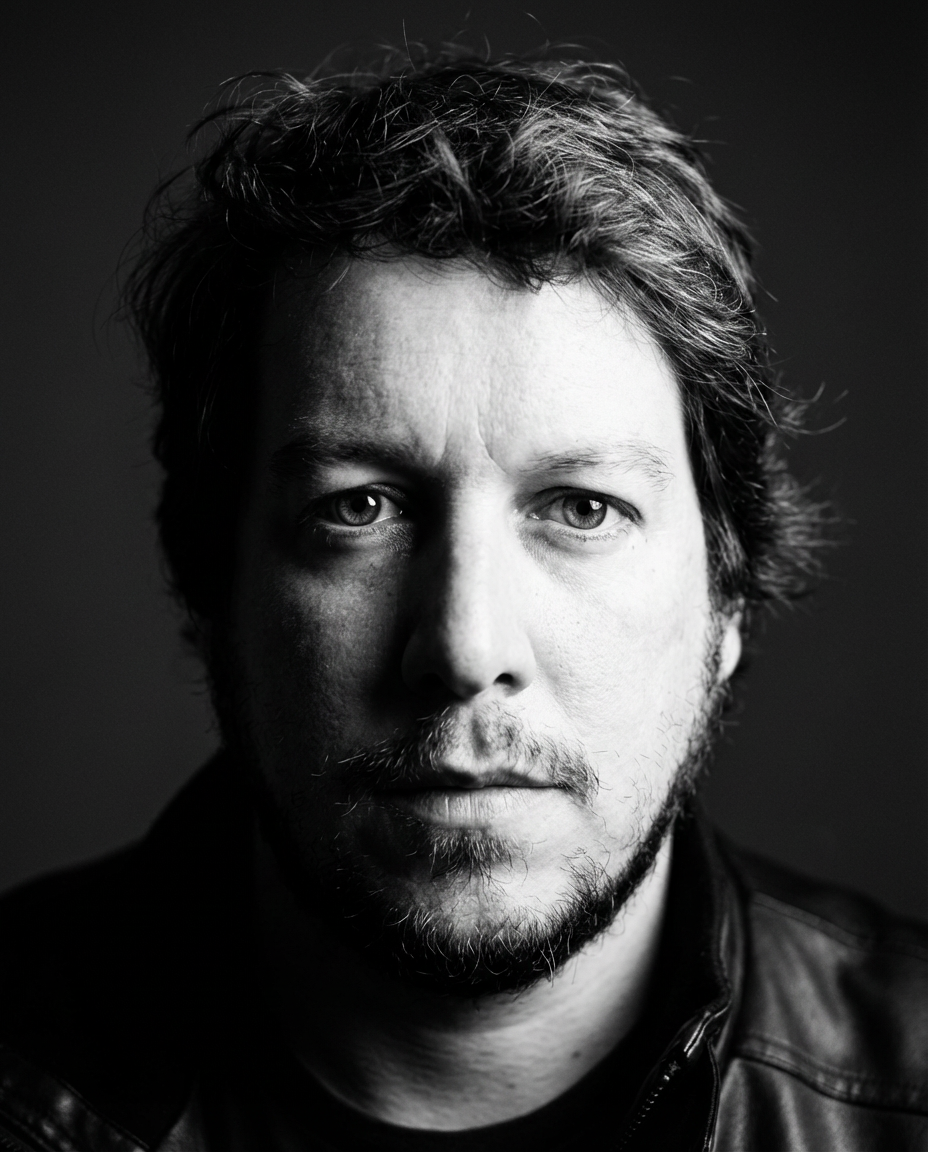
And the studio's own roster had already spoken. Weeks before the deal became public, Kane Parsons, the director A24 backed for Backrooms, told The Australian: "If I could snap my fingers and make generative AI disappear forever, I probably would. Creatively, I get no enjoyment from using those tools."
That is an A24 director, on the record about the kind of tools A24 has now accepted $75 million to help build. He was not reacting to the deal. The deal landed on top of his position, which makes the tension sharper, not softer.
What A24 actually is
Before unpacking the contradiction, it is worth being precise about what A24 has built and why people care so much when it moves.
A24 is not a prestige studio in the conventional sense. It does not have the institutional inertia of a Warner or the franchise obligations of a Disney. Its value proposition is curatorial: it bets on projects that do not fit the commercial math, backs filmmakers before their second film, and positions those bets as a brand statement. When you see the A24 logo, you have learned over fourteen years that the film probably takes a risk.
That curatorial identity is not a marketing claim. It is the actual product. The reason filmmakers want A24 backing and the reason audiences follow the logo is that someone inside that company keeps saying yes to the wrong-looking thing.
Walter Benjamin wrote in 1935 that the aura of an original is not a property of the object. It is what someone chooses to witness. A24's aura is not its catalog. It is the pattern of choices embedded in that catalog. The willingness to fund Ari Aster's grief horror before anyone knew his name. The commitment to Yorgos Lanthimos's distorted comedies. The bet on Moonlight in a year when nobody expected it to find an audience.
The question the deal raises is not whether AI tools can help make storyboards faster. They can. The question is what happens to the choosing when the infrastructure of choice is built by an optimization company.
What the tools actually are
A24 partner Scott Belsky tried to be specific in early coverage. The tools in development focus on storyboarding and specific pre-production stages. They "won't look anything like the prompted generation type of AI that people feel uncomfortable with." The goal, in Belsky's framing, is to "preserve creative control and support risk-taking."
That is an honest and reasonable goal. AI-generated storyboards, used well, can compress the gap between what a director envisions and what a production team can visualize before the camera is on. That gap is genuinely expensive. It is where miscommunication happens, where late pivots get born, where projects lose weeks of momentum to alignment problems that a clearer image could have prevented.
I have worked on enough productions to know the pre-visualization problem is real. A stop-motion campaign I directed required every decision to be made before the first frame was captured, because the cost of revision mid-shoot was prohibitive. The ability to iterate visually before committing to physical execution would have compressed weeks of preparation into days. The tool would have served the work.
So the tool itself is not wrong. The tool is useful. The question is what surrounds the tool: what pressures shape its development, and what those pressures eventually optimize for.
The problem with optimization partners
Google DeepMind's core competency is optimization. It identifies what works, at scale, and builds systems that do more of it. That is an extraordinary capability. It is also a specific lens that is not neutral when applied to creative workflow.
When DeepMind researchers sit inside A24's production pipeline to identify friction points and build tools to reduce them, they are making choices about which parts of the process are friction and which are necessary resistance. The choice of what to optimize is itself a creative and institutional decision. And it is a decision that will now be made, at least in part, by people whose professional frame is efficiency, not editorial identity.
This is not conspiratorial. It is an accurate description of how optimization logic works. You cannot build an AI tool for storyboarding without having some model of what a good storyboard is, what it is for, and what counts as better. Those embedded choices precede every use of the tool.
A few observations on what this means in practice:
- Storyboarding tools built with DeepMind will reflect the training data and objectives that shaped them. "Supports risk-taking" is a goal, not a guarantee, and it is harder to operationalize than "reduces iteration time."
- The non-exclusive deal means A24 can work with other AI companies. It also means DeepMind is learning A24's workflows while A24 receives $75 million. Information flows asymmetrically in research partnerships.
- The tools, if successful, will eventually shape what gets made as much as how it gets made. Workflow infrastructure influences development decisions in ways that become visible only long after the partnership is signed.
The Kane Parsons problem
Parsons said what many filmmakers in A24's orbit probably think but do not say on the record. His position is not naive. He made Backrooms, a film that turned a found-footage internet meme into something formally considered. He understands what tools can do. He still does not want them.
A24's response has been to emphasize that individual filmmakers retain their creative choices. Which is true, as far as it goes. But it sidesteps the structural question. The choices available to filmmakers are shaped by the infrastructure that surrounds them. When a studio's workflow is built in partnership with an optimization engine, the range of choices that workflow naturally supports expands in some directions and contracts in others. Not by design. By the logic of how optimization works.
Parsons and A24's institutional strategy are now publicly misaligned on a question that is not minor. That is not a scandal. It is a real tension the studio is going to navigate for years, probably without resolving it cleanly.
The only position that holds
The tool is never the art. That has always been true and remains true here. AI storyboarding tools are not going to make A24 stop backing unusual films. Kane Parsons is not going to make A24 return the $75 million.
What the deal makes visible is a question every production company is going to face, in some form, over the next several years: when you accept an optimization partner into your infrastructure, who decides what counts as optimal? The answer to that question will shape what gets made in ways that are not legible from the outside until they have already shaped it.
A24 has always bet on the wrong-looking thing. The $75 million from Google is, by any reasonable standard, the right-looking thing. Those two positions coexist in the same company right now.
What happens next depends entirely on which one shapes the tools.
Sources: Variety (Jun 23, 2026); Deadline; IndieWire; Gizmodo; Salon
Correction
Corrected Jul 23, 2026: announcement date fixed to June 22; Kane Parsons interview re-sequenced (it predates the deal by roughly three weeks, it was not a reaction to it); A24's age fixed to fourteen years.


