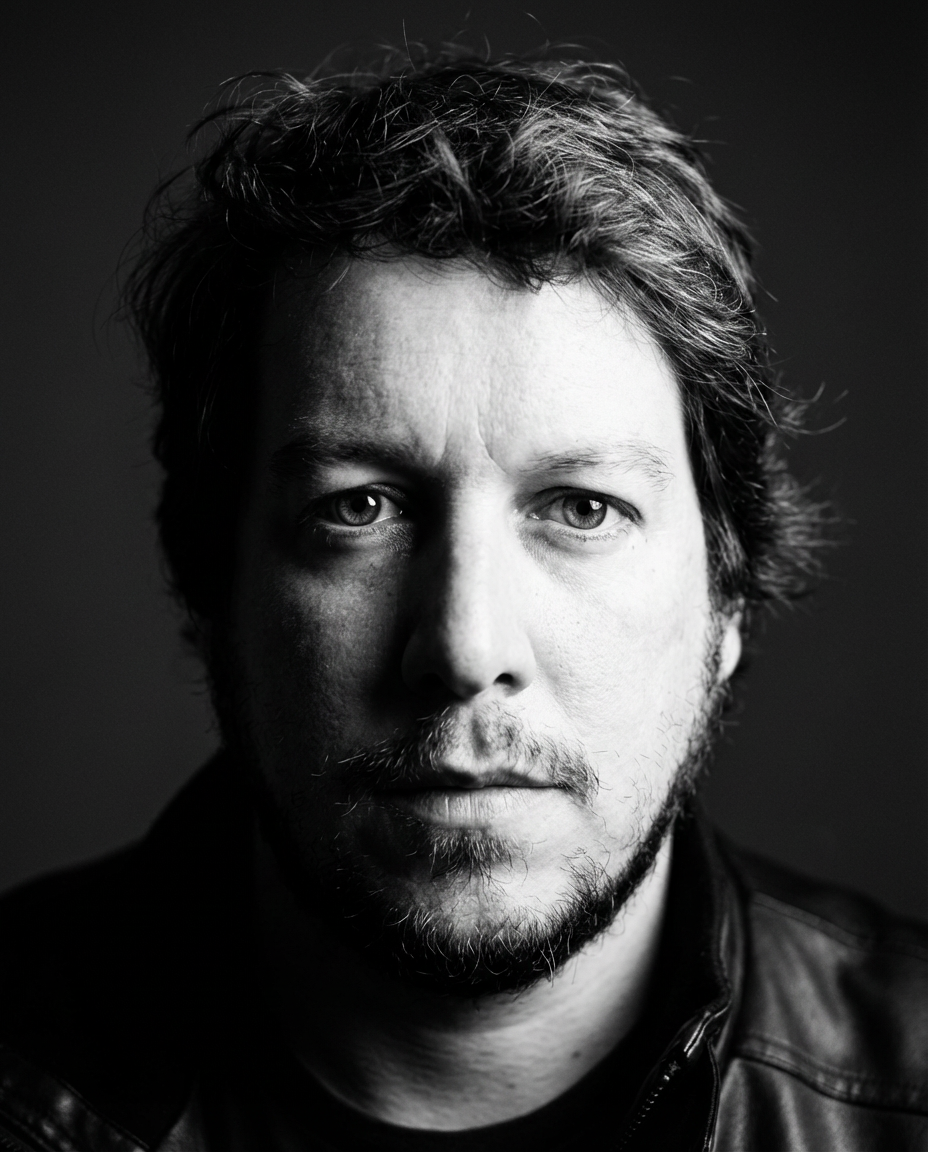

The Need That Never Turned Off
I have always needed to create. Not as a preference or a hobby, but as a requirement. The kind of need that makes you restless when you're not making something, that wakes you up at 4am with an idea that won't wait until morning. For 14 years, that need powered a career in audiovisual production: commercials, branded films, music, campaigns for brands like Disney, Nestlé, Yamaha, Carrefour, Starbucks, Benefit.
Alongside that need there was always another one, equally honest and considerably less romantic: I needed the work to pay. Not as an afterthought, but as a foundation. Creativity without economic viability is a hobby. I wasn't running a hobby. I was building a career, managing a production company, delivering results to clients who expected a return on what they spent. The creative obsession and the operational reality were always in the same room together, and learning to hold both of them at once is what 14 years of this work actually teaches you.
What it didn't teach me was how to build software.
The Wall I Kept Walking Around
For years, I had ideas that lived on the wrong side of a wall I couldn't get over. An app. A platform. A tool that could extend what I was doing in production into something that worked at scale, that created value when I wasn't physically on set. Every time one of those ideas surfaced, I ran into the same reality: I wasn't a programmer, I never wanted to be a programmer, and building anything technical required either a significant capital investment to hire someone who was, or years learning skills I had no appetite for.
It wasn't lack of ambition. It was an honest accounting of what I had and what I didn't. Capital-heavy production, the kind where you need a full engineering team to realize a product vision, was out of reach. So the ideas stayed ideas, and I stayed on the side of the wall where I knew how to operate.
I got very good at that side. But the ideas didn't stop coming.
The Moment the Wall Came Down
AI didn't arrive as a single dramatic moment. It arrived as a gradual shift in what was possible, and then, suddenly, in what was executable. The Stanford HAI AI Index 2025 documented what that shift looked like numerically: the cost of achieving GPT-3.5-level AI performance dropped from $20 per million tokens to $0.07 between November 2022 and October 2024: a 280-fold reduction in 18 months. Open-weights models went from trailing proprietary systems by 8 percentage points on benchmarks to trailing by 1.7. The capability gap that had made AI infrastructure exclusive to well-funded organizations effectively closed in two years.
For me, what that meant in practice was this: the things I couldn't produce in audiovisual without significant capital became producible. Motion, synthesis, visual development, scale. And the things I couldn't build in software without an engineering team became buildable, not because I became a programmer, but because AI lowered the barrier between an idea and its execution to something a single person with operational experience and the right tools could cross.
That's when OpenYourAIs became real. Not as an idea I was storing for later, but as a thing I could actually build.
The Wow Factor, Explained
There is something I've been chasing for my entire career, and I've never found a more precise name for it than the "wow factor." It's the moment when a client sees the deliverable and their reaction shifts from evaluation to genuine surprise. Not "this is good," but "I didn't know this was possible." That response has always been the target. Not because I need validation, but because that's the moment when work crosses from competent execution into something that actually matters to someone.
Every production decision I've made over 14 years, every choice about framing, pacing, sound design, the unexpected detail that makes a 30-second spot land harder than anyone expected, came from that obsession. Deliver more than what was asked for. Make the impossible look like it was always the obvious choice.
AI didn't change that obsession. It expanded the palette. Suddenly the things that were technically out of reach (the visual treatment that would have required a budget three times what we had, the effect that would have taken a specialist team two weeks) became things I could prototype in a day and deliver at a quality that held. The standard of "wow" went up, and so did my ability to reach it.
On Being an Artist First
I don't think of myself as a filmmaker. Or a musician. Or a producer, a director, a content creator, a developer, or any of the other labels that people have tried to apply over the years. I think of myself as an artist who works with whatever the job requires. There's a version of this idea in something I once heard from a musician I respect: give me a stick and I'll try to make music with it. That's the orientation. The medium is a tool. The impulse to make something is the constant.
That's why I never stayed in one lane professionally. Moving across formats, disciplines, and industries wasn't instability. It was following what the work needed. And it's why, when AI arrived and removed the technical barriers that had kept me out of software development, I didn't experience it as entering a foreign domain. I experienced it as finding another medium. One where the same instincts that make a commercial land (clarity of intent, precision of execution, obsession with the audience response) also determine whether a product works.
McKinsey's 2025 research named the emerging profile I was already becoming: the "agent orchestrator," a professional who designs and supervises AI-powered workflows without necessarily writing the underlying code. The business-side operator who can independently build software assets because agentic AI has democratized that layer of execution. The label is new. The orientation has been mine for 14 years.
I Went With Fear
I want to be clear about something: I was afraid. Building something in a domain I had no formal training in, publishing it publicly under my name, betting on tools and workflows that were moving faster than any stable foundation could form. That is legitimately frightening. Imposter syndrome doesn't disappear just because the tools have changed.
What I understood, from years of production work that had put me in enough situations where the options were to proceed or retreat, was that the fear is information, not a stop sign. It tells you the stakes are real. It tells you the outcome matters. It doesn't tell you to stop. I went anyway. That's the most accurate description of how OpenYourAIs got built: not with certainty, not with a safety net, and not after the fear went away. While it was still there.
It worked. Not because I was fearless. Because I moved.
Where This Phase Is Going
What I'm doing now (vibe coding, automation workflows, agentic production systems) is, without question, the beginning and not the destination. The stack is moving faster than any single person can fully map. New tools arrive weekly. Capabilities that required a team six months ago run on a single API call today. The learning curve is permanent and that's part of what makes it engaging rather than exhausting.
What I'm building is not a technology project. It's an expansion of the same creative practice that has driven everything else: using what's available to produce work that surprises people, built by someone who understands the craft well enough to direct the tools rather than just operate them. The AI doesn't replace the 14 years of production experience. It amplifies it. That's the only version of AI adoption that makes sense to me, not as a shortcut around expertise, but as a force multiplier for the expertise that already exists.
OpenYourAIs exists because the wall came down and I was already standing next to it with 14 years of momentum. The platform is the result of that collision: production instincts, creative obsession, and AI tools that finally match the ambition.
What I Want You to Take From This
Not inspiration. Instruction.
If you are a creative professional (filmmaker, designer, photographer, musician, writer, producer) who has been reading about AI and thinking about what it could mean for your work without actually testing it in production: that's the gap. Reading about it doesn't teach you the thing. The thing teaches you the thing.
The barrier has never been lower. The Stanford data on cost reduction means that the tools that were enterprise-only two years ago are now accessible to anyone with a browser and a monthly subscription. The McKinsey data on hybrid operator profiles means the market is actively creating demand for people who combine domain expertise with AI execution capability. The window for early positioning is not infinite.
I went with fear. That's the entire strategy. Go with fear and build anyway. The people who do that right now are the ones who will look back in three years and understand exactly why the timing mattered. Not the ones who waited until it felt safe.
It never feels safe. Go anyway.
Sources: Stanford HAI, AI Index 2025: State of AI in 10 Charts | McKinsey, The Agentic Organization: Contours of the Next Paradigm for the AI Era | BusinessWire, Stanford HAI 2025 AI Index: Record Growth in Capabilities and Investment
Correction
Corrected Aug 20, 2026: biographical accuracy. Ulisses Balbino was an actor and writer on the Ronald Rios Talk Show, not its director or producer, and he was never employed by MTV, Comedy Central or Paramount. Earlier wording claimed credits and network affiliations he does not hold and it has been fixed here.


